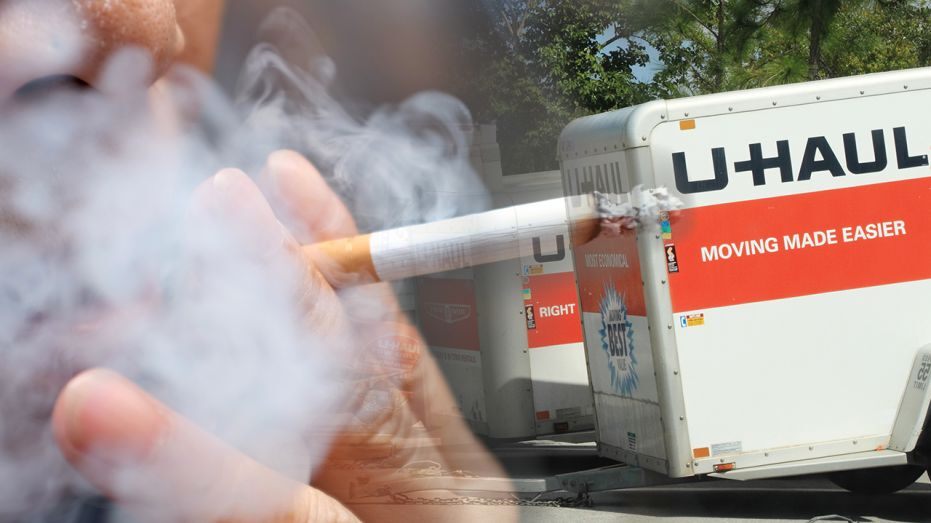
U-Haul’s Free-Smoking Workplace Wellness
“Who should have to pay the cost for the most preventable cause of cancer and lung disease: employers or employees?” -Tucker Sechrest
On the last day of 2019, U-Haul announced that they would not hire nicotine-used employees. This new is effective on Feb 2 in the 21 American states. In each of 21 states, it is legal not to hire nicotine users. The employees who are hired prior to that date will not be affected by this new policy.
The policy is designed to promote a healthy workplace as the U-Haul’s chief of staff, Jessica Lopez has claimed that “taking care of our team members is the primary focus and goal”. However, the policy benefits the company as it decreases health-care costs. A recent study shows that the employees who smoke add additional costs of $6000 annually, including insurance costs, productivity lost to smoke break and increased sick time.
Many hospitals have nicotine-free hiring policy to provide a healthy environment for their patients. Alaska Airlines also banned smoking due to the difficulty of smoking on planes and airports’ surrounding areas. However, the purpose of the policy imposed by U-Haul is either not to improve customer experience or improve work performance.
Besides, the policy control people’s personal behaviours that smoked users should be responsible for their addictive habits. In essence, workers get paid by bringing value and inputs for the company, but personal lifestyles should not really be controlled by organizations. People who smoke can also work hard for the company. The addictive habit and work performance do not interfere with each other.
In additions, the policy also distorts the equality of job opportunities. A large proportion of smokers have lower education, live below the poverty line, and are unemployed. U-Haul provides a number of low wage and physical labour jobs from maintenance workers to janitors, which restricts those people who may need them most.
Though the firm hopes that its action can contribute to healthy corporate culture, it is unfair to some people who are addictive to smoke at their early age. As a study shows, 28% of adolescents smoke cigarettes in 1996-1997 and in 2018, 5% of high school adolescents reported having smoked a cigarette. Greater education investments about the harmfulness of smoking or government intervention (e.g. higher tobacco taxes) may seen as a more efficient way to encourage health and wellness. If employers really take care of employees, they should respect employees’ expressed preferences and control the work itself.
Sources:
- Callison.K & Kaestner. R (2012) Do Higher Tobacco Taxes Reduce Adult Smoking? New Evidence of the Effect of Recent Cigarette Tax Increases on Adult Smoking. NBER Working Paper No. 18326
- CDC’s Office (2019) Cigarette Smoking and Tobacco Use Among People of Low Socioeconomic Status. Centers for disease control and prevention.
- Lundburg. P (2007) Does smoking increase sick leave? Evidence using register data on Swedish Workers. NCBI. Retrieved from February 7, 2020.
- Office of Adolescent Health (2019) Adolescents and Tobacco: Trends. HHS.gov. Retrieved from February 7, 2020.
- Sechrest.T (2020) Workplace Wellness comes for the working class. The Atlantic. Retrieved from February 7, 2020
- Tahlil.T et al. (2013) The impact of education programs on smoking prevention: a randomized controlled trial among 11 to 14 year olds in Aceh, Indonesia. BMC Public Health. 2013;13:367
- The Associated Press (2020) U-Haul International soon won’t hire nicotine users in 21 U.S. States. CBC News. Retrieved from February 7, 2020.
 Jingru You's Blog
Hi Amanda,
Thank you for your insightful post! I loved hearing your thoughts about this topic.
I think this is a really cool issue to discuss and shed some light on. It sounds like U-Haul might have a few lawsuits brought against them in the near future as a result of this workplace discrimination. The Star article titled, U-Haul is refusing to hire smokers. Can Canadian companies do the same?” discusses some key points on this debate (Saba, 2020). Author, Rosa Saba (2020) touches upon the main goal of hiring non-smokers, and that is in the interest of maintaining a healthy corporate culture. Moreover, the change only applies to new employees in 21 U.S states, not current employees. As well, it is highly unlikely that this job requirement will transfer over to Canada, Stuart Rudner, an expert in employment lawyer in Toronto mentions (Saba, 2020).
To add to your point about how this policy distorts the equality of job opportunities, this is very much an employment relations issue. Since it discusses disagreements between employees and employers, and discrepancy in fair treatment to all employees. Moreover, discriminating against smokers violates the Human Rights Act to discriminate against race, sex, and disability. In addition, this policy infringes on one of the key Ontario employment statutes, the Ontario Human Rights Code, which is a provincial law that enforces equal rights without discrimination in employment. Of course, this is only a hypothetical if U-Haul were to try and legislate this in their Canadian company policy.
I agree that it is important to highlight all aspects of this employment relations issue. On one hand, U-Haul’s chief of staff, Jessica Lopez claims that employee’s health is their primary goal. On the other hand, the company significantly benefits from the $6000 decrease in annual costs per employee who is an avid smoker, and productivity loss due to smoking breaks and heightened sick days. Overall, the ethics of U-Haul’s corporate team comes into play with their judgment of determining what they think is best for their employees.
Due to the reasons listed above, I strongly believe that U-Haul will unsuccessfully bring this policy to Canada, and that it will be met with much resistance in the corresponding 21 states in the U.S.
Thank you, Amanda for shining some factual light onto this very interesting topic! Do you think U-Haul will be successful in trying to establish this policy in Canada? I look forward to your response!
Best,
Sierra
Works Cited
Saba, R. (2020, January 3). U-Haul is refusing to hire smokers. Can Canadian
companies do the same? Retrieved February 10, 2020, from
https://www.thestar.com/calgary/2020/01/03/u-haul-is-refusing-to-hire-smokers-can-canadian-companies-do-the-same.html
LikeLike